A journey through the land of civilisation

The Andalusia Journey

Ten days through al-Andalus, from the Great Mosque of Córdoba to the mountains where the Moriscos held on to the shahadah in secret — and to the mosques, farms and universities where Muslim Spain is being built again today.

  • Dates19–29 November 2026
  • Duration10 days · 9 nights
  • FlightsDirect from New York
  • Jumu'ahGranada Mosque, 27 Nov
  • From$2,295 per person

Córdoba · Seville · Ronda · Granada · the Alpujarra · Toledo · Madrid. Two nights in Córdoba, two in Seville, four in Granada and a final night in Madrid.

Have they not travelled through the land and seen how those before them met their end?
Surah Ar-Rum, 30:9
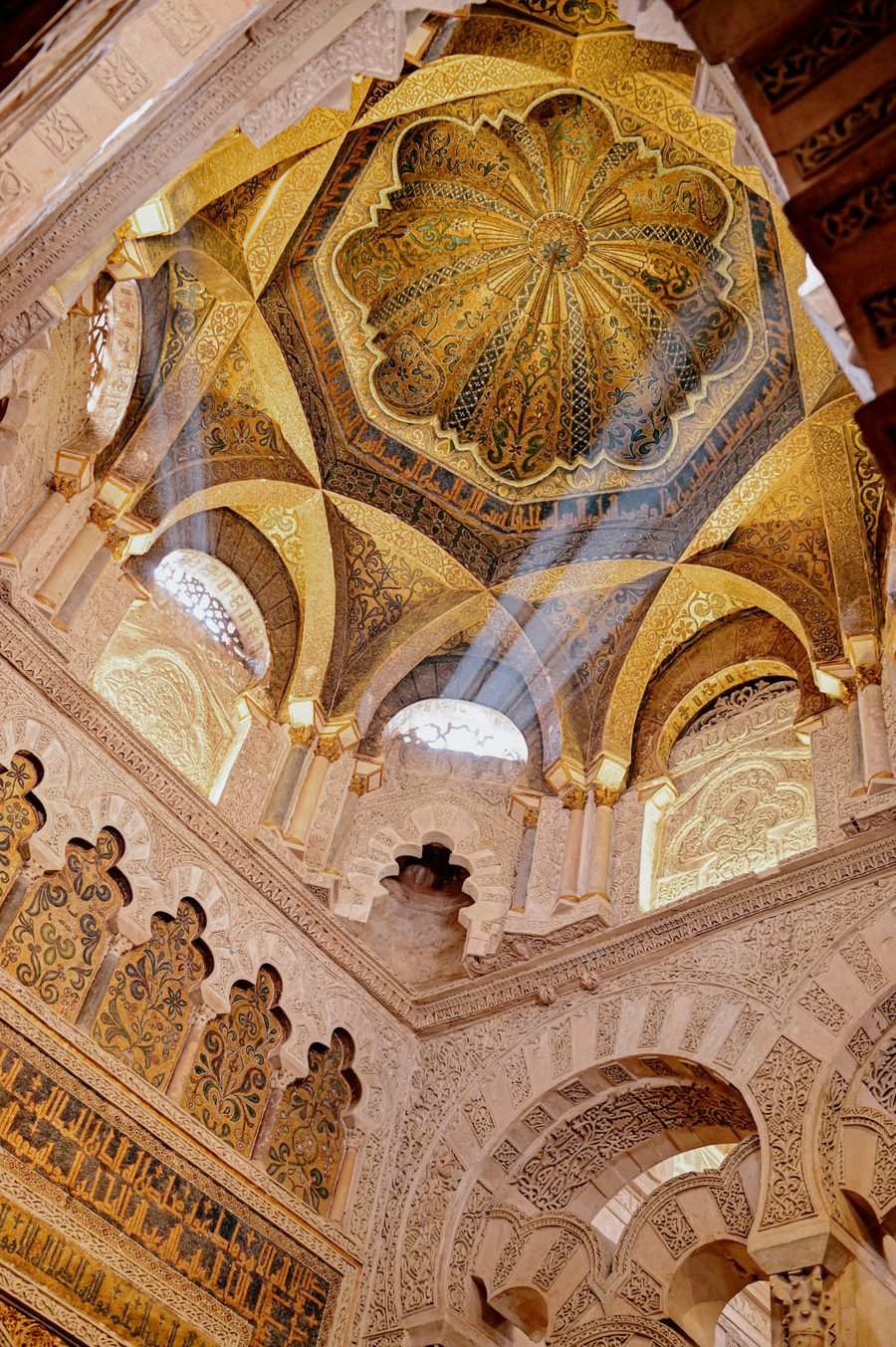
The dome above the mihrab of the Great Mosque of Córdoba

An invitation

The rise, the fall, and the rise again

For nearly eight centuries the adhan was called across the hills and river valleys of this land. Muslims here prayed, studied, traded, governed, married and were buried. They built libraries when much of the continent had none, and they produced scholars whose books are still opened in our masajid today. Al-Andalus was not a footnote to Islamic history. For a long season, it was one of its brightest chapters.

This journey is a journey through the life of an ummah: how it rose, what it achieved, how it declined, and what Allah teaches us through all of it. We will stand beneath the arches of the Great Mosque of Córdoba. We will walk through the halls of the Alhambra, where the Nasrids carved a single sentence into the walls thousands of times over — wa la ghaliba illa Allah, there is no victor but Allah. We will climb into the mountains of the Alpujarra, where believers held on to the shahadah in secret long after the kingdom was gone and the masajid were sealed.

And we will meet the Muslims of Spain today: a family working an olive farm outside Córdoba, students at a young Islamic university outside Seville, a Spanish Muslim family running a halal kitchen high in the mountains. On Friday we will pray Jumu'ah in the first purpose-built mosque Granada has seen in more than five hundred years, with the Alhambra in full view across the valley. Their stories close the circle. Al-Andalus is not only something that ended. By the mercy of Allah, something is beginning again.

A word before we go

Three things to carry with you

01

Travel with an intention

The Prophet, peace and blessings be upon him, taught that deeds are by their intentions. A journey undertaken to strengthen iman, to reflect on the signs of Allah in the earth and in the fates of nations, and to honour the believers who came before us is not tourism. Renew that intention now, and renew it again each morning of the trip.

02

The prayers come first

The itinerary is built with time to rest, refresh and pray at each hotel, and our guides will advise on the best times and places along the way. Combining prayers is a mercy Allah has given the traveller. Keep your salah at the centre of the day, not at the edge of it. The whole point of standing where these believers stood is lost if we do not stand as they stood.

03

Look, and then think

Andalusia is beautiful enough to distract. The gardens, the tilework, the mountain light and the food will all compete for your attention. Take them in fully, and then ask the harder question every one of these sites is quietly putting to us: how did a civilisation this strong come to an end, and what does that ask of us today? That question is the real journey. Everything else is the road.

Your flights

Direct, both ways

Outbound · Iberia IB0212

  • Departs New York (JFK) · 5:05 pm
    Thursday 19 November
  • Arrives Madrid (MAD) · 6:25 am
    Friday 20 November

Return · Iberia IB0211

  • Departs Madrid (MAD) · 12:20 pm
    Sunday 29 November
  • Arrives New York (JFK) · 3:35 pm
    Sunday 29 November

Travelling from another city? We can price the journey as a ground package alone — just ask.

Day by day

The itinerary

Tap any day to open it. The order and timing of visits may be adjusted by the guides in response to opening hours, travel conditions and the needs of the group. The substance of the journey remains as described.

We begin the way every traveller to al-Andalus once began, arriving from far away at the edge of a land that carried the adhan for nearly eight hundred years.

We leave on the evening of Thursday 19 November on the direct Iberia flight from JFK, and make the du'a of travel together before boarding. We land in Madrid on Friday morning, where our representative meets the group in the arrivals hall.

The road south takes us past Toledo — Tulaytulah to the Muslims. We stop at the viewpoint above the gorge for a first look at the city, wrapped almost entirely by the River Tagus and seemingly frozen in the century it was built. Toledo was a great centre of Muslim Spain for more than three and a half centuries until it fell in 1085, a loss that shook al-Andalus and set much of what followed into motion. Today we only look at it from a distance. We return on our final day to walk its streets.

We stop for lunch at a service stop en route, where halal options are available, and arrive at Hotel Las Adelfas in Córdoba with time to rest, freshen up and pray. We gather for our first dinner together in the evening.

  • Toledo viewpoint
  • Hotel Las Adelfas
  • First evening together

There was a time when a student anywhere in the Muslim world who wished to reach the highest learning of his age set his face toward Córdoba.

We begin at the Calahorra Tower and the Roman Bridge, standing over the Guadalquivir at the historic entrance to the city. The bridge is older than Islam in this land, and it was the Muslims who rebuilt and maintained it as the artery of their capital. The tower now houses the Living Museum of al-Andalus.

From there we walk the narrow lanes of the old quarter. It was in these streets that Imam al-Qurtubi, whose tafsir sits on the shelves of our masajid today, and Ibn Abd al-Barr, Ibn Hazm and Ibn Rushd studied, taught and were known. Córdoba was not remarkable because it was wealthy. It was remarkable because knowledge was honoured there.

After lunch, the Great Mosque of Córdoba. Its first stones were laid by Abd al-Rahman I in 785 and it was enlarged again and again by those who came after him, until it could hold the whole city in prayer. We walk into its forest of arches, red and white, rising row upon row in a rhythm meant to lift the eye and quiet the soul. At the far end stands the mihrab, still marked out in gold and marble. The building functions as a cathedral today and Muslim prayer inside is not permitted; we enter with composure and with respect, as visitors. Let the heart do what the tongue cannot.

In the evening we leave the city for an olive farm at Almodóvar del Río, to meet a Spanish Muslim family and members of the local community, hear their story and share dinner together before returning to Córdoba. The visit is part of the journey; the meal at the farm is arranged separately and charged in addition.

  • The Great Mosque
  • Calahorra Tower
  • Olive farm
  • Additional cost

A caliph built a city to declare that his rule would last. Within a lifetime it was ash.

Madinat al-Zahra was raised in the tenth century by the Umayyad Caliph Abd al-Rahman III as a new seat of power — a palace city of terraces, gardens, reception halls and running water, built to overwhelm every ambassador who approached it. With our guide we explore the archaeological site and hear the story of the city that was, for a short while, the centre of political life in al-Andalus.

It did not last. Within roughly seventy years of its founding it was looted and burned in civil war, and for centuries afterward it lay buried, its stones carried off to build other things. There is no better place in Spain to sit with what Allah has told us about this dunya: that its splendour is passing, that power is loaned and not owned, and that nations rise and fall by the decree of the One who does not change.

After lunch we travel west to Seville — Ishbiliyah — and check in with time to rest and pray. In the late afternoon our guide takes us on a relaxed introductory walk through the historic heart of the city. Look up as you walk: the tower that dominates the skyline began its life as the minaret of the city's great mosque, and the shape of the call to prayer is still visible in it.

  • Madinat al-Zahra
  • Transfer to Seville
  • Orientation walk

In the morning we see what the Muslims of this land left behind. In the afternoon we meet the people building what comes next.

We join a guided visit to the Royal Alcázar, a palace complex whose story reaches back into the Islamic period of the city, walking its courtyards, gardens and richly decorated halls and reading the layers of Islamic, Mudéjar, Gothic and Renaissance work that have accumulated over the centuries.

The Mudéjar craftsmanship here deserves particular attention. Long after the political power of the Muslims in Seville had ended, Muslim artisans were still the ones shaping the plaster, the tile and the timber, and Christian kings still wanted their palaces to look like this. Beauty rooted in tawhid outlived the state that produced it. There is a lesson in that about what actually endures.

In the afternoon we travel to the Islamic University of al-Andalus at La Alquería Andalusí, a historic Andalusian estate — described by the university as a living link to the Andalusian past, with more than a hundred and fifteen years of history — that is now home to an emerging centre of Islamic learning. We tour the campus and hear its vision: to develop Islamic scholarship in Spain and to raise a generation of Muslims firmly connected to their faith, their heritage and their European identity.

This visit is the turning point of the journey. Until now we have been walking through what was. Here we stand in what is being built. Come with your questions ready.

  • Royal Alcázar
  • Islamic University
  • Mudéjar craft

Today the land itself becomes part of the story, as we climb into the mountains that sheltered the last Muslims of Spain.

An early breakfast this morning before checking out. Before leaving Seville we stop briefly at the Plaza de España, a modern building whose arches, tilework and geometry quietly acknowledge where Andalusian design came from.

We travel up into the mountains to Ronda, set dramatically above the El Tajo gorge. On a guided walk through the old town we take in the Puente Nuevo, the eighteenth-century bridge that spans the ravine, and then turn to the town's Islamic past: the remains of its old mosque and the Minaret of San Sebastián, one of the surviving reminders that the adhan was once called from these heights. Ronda was a fortress town precisely because it was hard to reach — and that same geography would soon matter a great deal to the believers who came after.

There is free time in Ronda for lunch and to explore at your own pace before we continue east to Granada, the last Muslim kingdom of al-Andalus. As we descend into the vega, remember that this is where the story narrowed: when the rest of the peninsula had gone, Granada held on for two and a half more centuries. We check in, rest and pray, then meet our guide for an introductory walk through the city.

  • Ronda
  • Minaret of San Sebastián
  • Plaza de España
  • Free time

There is no victor but Allah. The Nasrids carved that sentence into these walls thousands of times over, and then they lost the kingdom.

With an expert guide we explore the Alhambra, the palace city of the Nasrid sultans and the final great monument of Muslim Granada. We move through its courtyards, palaces, gardens and water channels, and take in the density of its ornament: carved plaster, tile mosaic, honeycomb vaulting and, above all, writing. The walls are covered in Arabic — poetry, Qur'an, and the repeated Nasrid motto, wa la ghaliba illa Allah.

Sit with that for a moment. The people who built the most beautiful palace in Europe wrote on every surface of it that victory belongs to Allah alone, and then watched their kingdom fall in 1492. The message was never that they could not be defeated. It was that whatever came to them came from Allah, and that no earthly power, theirs or anyone else's, was ever the real one. The Alhambra is not a monument to Muslim triumph. It is a monument to Muslim tawakkul, and it is more moving for it.

Afterwards there is free time to experience Granada at your own pace — the streets and historic quarters of the Realejo and the Albaicín, the shops and markets, or simply a viewpoint with the Alhambra across the valley. Look for the Andalusian character that survives in the doorways, the courtyards and the water.

  • The Alhambra
  • Nasrid Palaces
  • Albaicín
  • Realejo

When the kingdom fell, the believers did not. They went up into these mountains and held on to the shahadah in whatever way they could.

We stop first at the Puente de Tablate, one of the old routes into the Alpujarra. Standing here it becomes obvious why this landscape mattered: a narrow crossing, a deep ravine, and behind it valley after valley where a community could disappear from the reach of a state. This is the door through which the last Muslims of Spain passed.

We continue to Lanjarón, a town with deep Muslim roots that remained Muslim until the fall of the Kingdom of Granada and later became an important centre during the Morisco uprisings, and visit the remains of its castle. The terms of the surrender of Granada had promised the believers their religion. Those terms were broken within a decade. Masajid were closed, Arabic was outlawed, and mass forced conversion followed. Those compelled to accept baptism became known as the Moriscos, and for over a century they went on praying, fasting, naming their children and washing their dead as Muslims behind closed doors, at the risk of their lives. When they finally rose in revolt between 1568 and 1571 it was crushed, and by 1614 they had been expelled from Spain altogether. Remember them in your du'a today. They held the deen with almost nothing to hold it with.

We climb deeper into the mountains to Pampaneira, one of the most beautiful villages of the High Alpujarra, and wander its steep lanes, flat-roofed white houses and distinctive tinaos — the covered passageways between buildings whose origins are closely tied to the Muslim and Morisco communities of the region. The layout of these villages, the terraced fields and the irrigation channels running through them are all inherited. This is Andalusi engineering, still working, centuries after the people who designed it were driven out.

We stop for lunch at Baraka, an alcohol-free restaurant and meeting place established in 2003 and now part of the diverse community of Órgiva. We meet the Spanish Muslim owners and hear their own story: how they came to Islam, what drew them to the Alpujarra, and what it takes to build a halal-oriented business in these mountains. The symmetry of the day is not an accident. In the morning we stand where Muslims were forced to hide their faith. In the afternoon we sit and eat with Muslims openly practising it in the same valleys.
  • Lanjarón Castle
  • Pampaneira
  • Baraka, Órgiva
  • Puente de Tablate

For more than five hundred years there was no purpose-built mosque in this city. Today we pray Jumu'ah in one, looking straight across at the Alhambra.

This morning we make our way to the Granada Mosque, high in the Albaicín. It is the first purpose-built mosque raised in this city in over five centuries, and it took decades of effort and patience before it finally opened. Its terrace looks directly across the valley at the Alhambra, and the view alone is worth the climb.

We will take in that view, learn how the mosque came to be, and then enter to pray Jumu'ah together. Consider what you are actually doing when you stand in that row. In the city where the last Muslim kingdom of this land came to an end, in full sight of the palace of its last sultans, the khutbah is being delivered again and the believers are standing shoulder to shoulder again. Very few of us will pray a Jumu'ah more meaningful than this one. Come prepared for it, in a state of wudu, with your heart present.

The afternoon is yours. Explore the markets and shopping streets around the Albaicín, where the tea houses, the leather, the lanterns, the ceramics and the spices make it easy to forget which continent you are standing on. Granada is a place where East and West have been folded into one another for so long that the seam is no longer visible.

  • Jumu'ah
  • Granada Mosque
  • Albaicín
  • Free afternoon

We end where we began, at Toledo, and then carry the story forward into the Spain of today.

An early start from Granada. On arrival we take in the panoramic view across Toledo, ringed almost completely by the River Tagus, before entering the historic centre for a guided tour of the layers of Muslim, Jewish and Christian history that earned the city its reputation as a city of three cultures. This was the city whose translators carried the scientific and philosophical inheritance of the Muslim world onward, and whose fall in 1085 marked the beginning of the long retreat of al-Andalus.

Our visit includes the Mosque of Cristo de la Luz, known in its own time as Bab al-Mardum. Built in the year 999, it is one of the finest surviving pieces of Islamic architecture in the city: a small building, nine vaulted bays, every one of them different, put up by a Muslim community in a provincial city and standing more than a thousand years later. Not everything that lasts is enormous.

After lunch we continue to Madrid for a panoramic tour of the capital, including the Royal Palace, the Santiago Bernabéu and the historic centre. Few of the millions who visit Madrid know that the city began as Majrit, a fortress settlement founded in the ninth century under the Umayyad amirs of Córdoba, and that its name still carries the Arabic word for a watercourse.

We close the day, and the historical arc of the journey, at the Madrid Mosque, meeting the contemporary Muslim community of the capital. From the first stones of Córdoba in 785 to a living, growing Muslim community in Madrid in 2026: the thread was stretched thin, but by the mercy of Allah it was never cut.

  • Toledo
  • Bab al-Mardum
  • Madrid Mosque
  • Majrit

We return home carrying more than photographs.

Breakfast at the hotel, then check out and meet your guide and driver in the lobby. We transfer together to Madrid Barajas in good time for the direct Iberia service departing at 12:20 pm, arriving into New York at 3:35 pm the same afternoon.

Al-Andalus is a story with a hard ending, and it would be easy to come home only saddened by it. Do not stop there. The believers of this land built, learned, worshipped and gave, and what they left behind still teaches the ummah eight centuries later. They also show us plainly what happens to a people when unity gives way and the deen becomes ornamental rather than lived.

So the question we take home is not what happened to them. It is what we intend to do with what we have been given: our masajid, our children, our institutions, our time. May Allah accept this journey from us, join us with the righteous who walked this land before us, and make us people who build for the next generation as they built for us. Ameen.

  • Airport transfer
  • Direct flight home

The detail

Notes for travellers

Included in the journey

  • Direct return flights, New York (JFK) to Madrid with Iberia
  • Nine nights' accommodation — two in Córdoba, two in Seville, four in Granada, one in Madrid
  • Breakfast at the hotel every morning
  • Guided visits to the Great Mosque of Córdoba, Madinat al-Zahra, the Royal Alcázar, the Alhambra, Ronda and Toledo
  • Orientation walking tours in Seville and Granada
  • Visits to the Islamic University of al-Andalus, the Granada Mosque and the Madrid Mosque
  • The evening visit to the olive farm at Almodóvar del Río — the visit itself, with any meal there charged separately
  • Private coach transport throughout, including both airport transfers
  • An English-speaking guide with the group for the whole journey
  • Time to rest, refresh and pray built into the schedule at each hotel

Not included

  • All lunches and dinners — these are at your own expense
  • Any meal taken at the olive farm, including the evening dinner, which carries an additional cost confirmed separately
  • Travel insurance — recommended, and may be purchased at your discretion
  • Personal spending, gifts and optional activities
  • Visas, where your passport requires one for Spain

Still to be confirmed

The Spanish Muslim family and community visit associated with the olive farm evening is not yet confirmed. We will let you know as soon as it is.

Pricing

What the journey costs

Prices are per person and cover everything listed above, including direct return flights from New York. Choose the room arrangement that suits you.

Triple occupancy

$2,295

per person

Three travellers sharing one room.

Double occupancy

$2,445

per person

Two travellers sharing one room.

Single occupancy

$2,795

per person

A room to yourself for the whole journey.

All prices are in US dollars. A $100 deposit secures your place, with the balance paid in stages — see the payment schedule below. Breakfast is the only meal included; the dinner at the olive farm on day two is charged separately from the visit.

Before you ask

Practicalities

How physically demanding is it?
Moderate to active. Expect several kilometres of walking on most days, much of it on cobbles and some of it steeply uphill — the Albaicín, the Alhambra grounds, Ronda and the mountain villages of the Alpujarra in particular. Pampaneira is built on a slope and its lanes are narrow and stepped. There are two early starts, on days five and nine. If anyone in your party has limited mobility, tell us when you enquire and we will be honest about what can and cannot be adapted.
How are meals handled?
Breakfast at the hotel is the only meal included in the price. Lunches and dinners are at your own expense, which leaves you free to eat where and when you like — your guide will advise on suitable places in each city. Several meals are still taken together as a group: the first dinner in Córdoba, lunch on day one at a service stop with halal options, and lunch on day seven at Baraka, the alcohol-free Muslim-owned restaurant in the Alpujarra. Dinner at the olive farm on day two is charged separately from the visit itself. Tell us about any dietary or allergy requirements at booking rather than on the day.
How is salah handled?
Time to rest, refresh and pray is built into the schedule at each hotel check-in, and our guides advise on prayer times and suitable places throughout each day. Combining prayers is a mercy given to the traveller and there will be days when that is the sensible course. Jumu'ah on 27 November is prayed at the Granada Mosque in the Albaicín. Note that Muslim prayer is not permitted inside the Great Mosque of Córdoba.
What will the weather be like in late November?
Mild in the cities and genuinely cold in the mountains. Córdoba and Seville are usually pleasant during the day and cool after Maghrib. Granada sits at a higher altitude, with the Alpujarras higher still, so Day Seven in particular calls for warm layers, a waterproof jacket, and shoes with good grip. Days are short at that time of year, which is part of the reason many of them begin early.
Do I need a visa?

If you are travelling on a US passport, no. Spain is in the Schengen Area, and US citizens may enter for tourism for up to 90 days in any 180-day period without a visa. This journey is ten days, comfortably inside that.

Two things are still worth checking. Your passport must be valid for at least three months beyond the day you leave the Schengen Area, and it must have been issued within the previous ten years — travellers are refused boarding over both every year. Separately, the EU is introducing ETIAS, an online travel authorisation for visa-exempt visitors. It is not a visa, just a short form and a small fee, but its start date has been postponed several times, so check whether it applies to you closer to departure.

If you hold a passport from anywhere else — including if you are a US permanent resident travelling on another country's passport — requirements depend entirely on your nationality, and they change. Check with the Spanish consulate that covers you and start early, as appointments can be slow. We can provide a booking confirmation and an itinerary letter to support an application, but we cannot apply on your behalf.

Will the itinerary change?
The order and timing of visits may be adjusted by the guides in response to site opening hours, travel conditions and the needs of the group. The substance of the itinerary will remain as described here.
How does payment work?

In three stages, so the cost is spread rather than falling due all at once.

  • $100 registration deposit Due at the time of registration. This is applied toward the total cost of the trip, and is fully refundable if you request cancellation within seven days of registering.
  • $500 second payment Due within fourteen days of registration, and also applied toward the total cost of the trip.
  • Final payment The remaining balance, to be paid in full by 1 October 2026.
What is the cancellation policy?
  • Within seven days of registration The $100 registration deposit is fully refundable.
  • After seven days, through 30 September 2026 The $100 registration deposit becomes non-refundable. For additional payments, any non-refundable expenses or supplier charges already incurred on the traveller's behalf will not be refunded.
  • Beginning 1 October 2026 All payments become non-refundable, as final arrangements and financial commitments for flights, accommodation, transportation and other trip services are being finalised.

No-shows and unused services. No refunds will be provided for missed flights, late arrivals, early departures, or any portion of the itinerary voluntarily or involuntarily unused by the traveller.

Airline or supplier changes. Any refunds resulting from an airline or supplier cancellation will be handled in accordance with the applicable supplier's policies and applicable law. Federal rules, for example, can require refunds when an airline cancels or significantly changes a flight and the passenger declines the alternative transportation.

What happens in unforeseen circumstances?

In the event that the trip is cancelled, delayed, or materially affected by circumstances beyond our reasonable control — including war, terrorism, civil unrest, severe weather, natural disasters, pandemics or public health emergencies, government restrictions, airline disruptions, or similar events — we will make every reasonable effort to recover funds from airlines, hotels, transportation providers, and other vendors.

Any amounts successfully recovered will be returned to travellers, less any non-refundable costs already incurred. However, we cannot guarantee reimbursement for funds that have become non-refundable or are retained by third-party suppliers.

Travel insurance is strongly recommended to help protect your investment against unforeseen circumstances, trip cancellation, interruption, medical emergencies, and other covered events.

رَبَّنَا آتِنَا فِي الدُّنْيَا حَسَنَةً وَفِي الْآخِرَةِ حَسَنَةً وَقِنَا عَذَابَ النَّارِ

Our Lord, grant us good in this world and good in the next, and protect us from the punishment of the Fire.
Surah Al-Baqarah, 2:201

19–29 November 2026

Take the first step

Tell us who is travelling and we will send the price, the deposit terms and anything else you need to decide — with no obligation and no chasing.